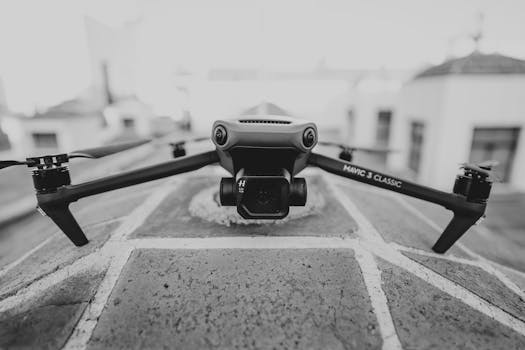
When we talk about “high-end drone reviews: DJI vs. Parrot,” it’s easy to get lost in a whirlwind of megapixels, flight times, and obstacle avoidance sensors. But what truly separates these titans of the sky? Beyond the impressive spec sheets lies a deeper narrative about user experience, innovation philosophy, and the very essence of what makes a drone feel like an extension of your creative will. Are we simply comparing flying cameras, or are we witnessing two distinct visions for the future of aerial imaging and exploration? Let’s peel back the layers and see.
The Camera Question: Seeing the World Through Different Lenses
At the heart of any high-end drone is its ability to capture stunning visuals. DJI, with its consistently stellar camera systems, has set a benchmark that many strive to meet. Their commitment to professional-grade sensors, sophisticated image processing, and gimbal stabilization is undeniable. Whether it’s the cinematic prowess of the Mavic series or the raw power of the Inspire, DJI often feels like it’s speaking the language of filmmakers and photographers.
Parrot, however, has taken a slightly different path, often focusing on robustness and a more accessible, yet still highly capable, imaging experience. Their drones, particularly in the ANAFI line, have emphasized portability and unique camera angles, like the 180-degree tilt. This isn’t just about resolution; it’s about how you can capture a scene. Does DJI’s perfectionism always translate to a better shot for every user, or does Parrot’s ingenious design unlock creative possibilities that others miss? It’s a fascinating dichotomy to ponder.
Flight Performance & Intelligence: Who Commands the Skies Better?
The thrill of piloting a high-end drone goes far beyond the camera. It’s about the seamless interaction, the intuitive controls, and the sheer confidence you feel in its aerial capabilities. DJI’s flight controllers and intelligent flight modes are legendary. Their obstacle avoidance systems are often lauded for their comprehensive coverage and proactive nature, providing a safety net that encourages even novice pilots to push their boundaries. The refined algorithms feel mature and dependable.
Parrot’s approach, while perhaps less flashy in terms of sheer sensor count, often prioritizes a different kind of intelligence. Their drones are built for resilience and ease of use, especially in challenging environments. The focus on compact design doesn’t compromise their stability in wind, and their intelligent flight features, while perhaps fewer in number than DJI’s, are often thoughtfully integrated and perform reliably. When evaluating “high-end drone reviews: DJI vs. Parrot,” considering how these systems help you achieve your goals – whether it’s precise surveying or spontaneous aerial art – is crucial.
Innovation Cycles: Pioneers or Refiners?
Both DJI and Parrot are undeniably innovators, but their strategies feel distinct. DJI often seems to lead the charge with groundbreaking hardware and ambitious feature sets, pushing the envelope with each new release. They cultivate an ecosystem that feels cutting-edge and comprehensive.
Parrot, on the other hand, often appears to be more deliberate, focusing on solving specific user pain points or exploring niche applications with clever engineering. Their commitment to open standards and the broader drone community is also a significant differentiator. It makes you wonder: is it more valuable to be the first to introduce a feature, or to perfect it in a way that truly resonates with a user’s needs? This philosophical difference shapes their product lines in profound ways.
The Ecosystem and User Experience: Beyond the Drone Itself
What’s it like to own and operate these machines day-to-day? This is where the seemingly minor details become paramount. The companion apps, the ease of firmware updates, the availability of accessories, and the overall community support all contribute to the holistic drone experience.
DJI’s ecosystem is vast and polished, offering a seemingly endless array of compatible gear and a highly refined app interface. It’s a system designed for seamless integration. Parrot’s ecosystem, while perhaps smaller, is often characterized by its thoughtful design and a focus on specific use cases. Their app interfaces are generally clean and intuitive, prioritizing a direct and efficient user journey. When you’re out in the field, struggling with a clunky interface or a missing accessory can sour even the most spectacular flight. This is a critical consideration in any in-depth “high-end drone reviews: DJI vs. Parrot” analysis.
Navigating Your Choice: What Does “High-End” Truly Mean to You?
Ultimately, deciding between DJI and Parrot for your high-end drone needs isn’t about declaring a single winner. It’s about understanding your own priorities.
Are you a professional filmmaker or photographer chasing the absolute best image quality and cinematic control? DJI’s established camera performance and comprehensive feature sets often make them the go-to choice.
Do you value exceptional portability, unique creative angles, and robust performance in a wide range of conditions, perhaps for inspection or specific creative projects? Parrot’s innovative designs and resilient build might be more compelling.
How important is the breadth of the accessory ecosystem versus a more focused, user-centric approach?
Does the idea of cutting-edge innovation appeal more, or do you prefer refined, proven solutions?
Wrapping Up
The world of high-end drones is a dynamic landscape, and the rivalry between DJI and Parrot continues to push boundaries. Instead of seeking a definitive “better,” I encourage you to explore what each brand offers in relation to your specific aspirations. Consider what truly elevates your aerial vision. Is it the raw power and refinement of DJI, or the clever ingenuity and robust design of Parrot? Your answer will define which of these titans is the right partner for your skyward adventures.